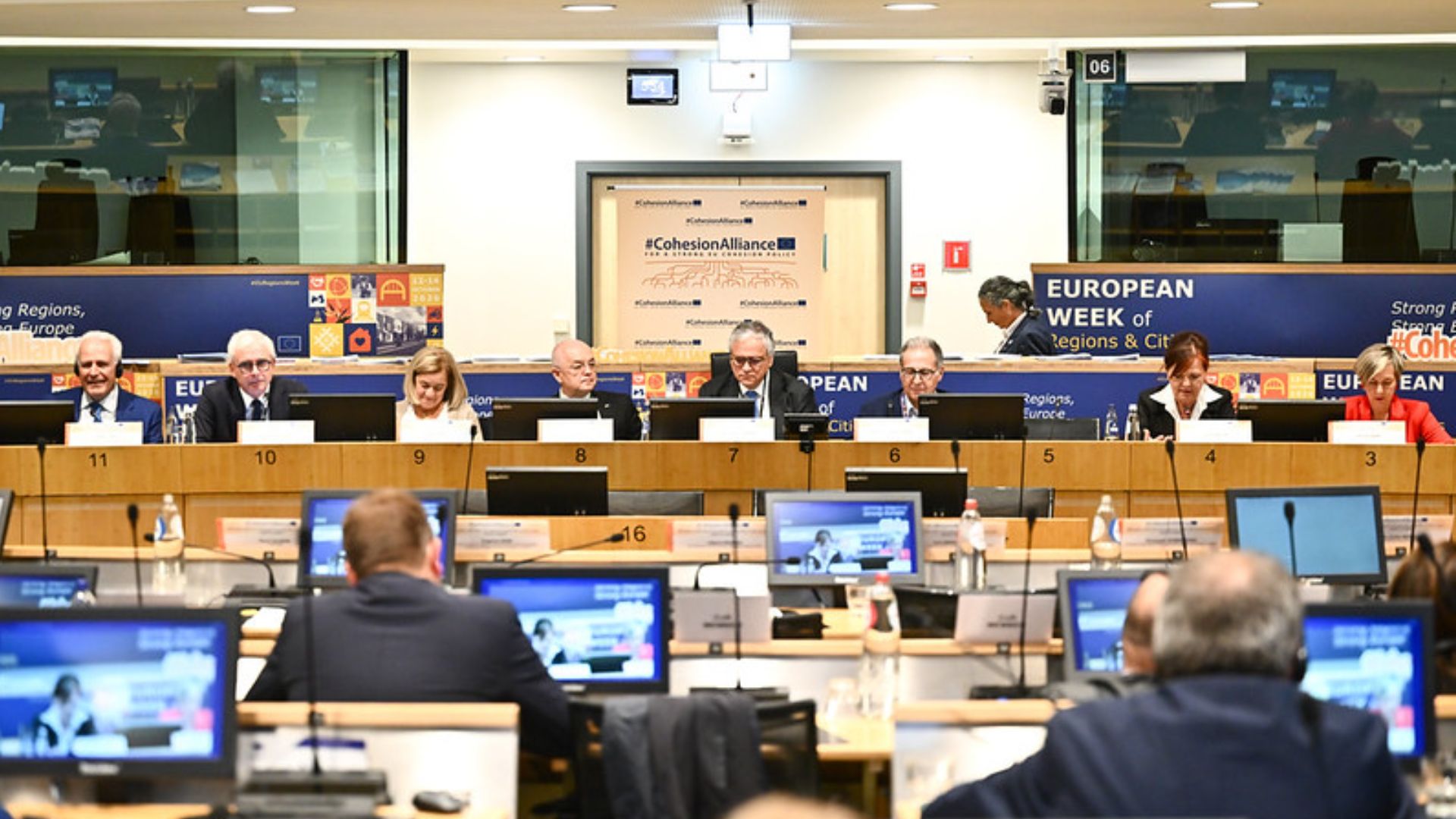
The Assembly of European Regions (AER) is calling for the participation of regional authorities in preparing and managing future EU funds to be guaranteed through binding legislative provisions. This position was presented on 14 October 2026 in Brussels by Lilijana Madjar, AER Vice-President for Cohesion Policy, during a debate on National and Regional Partnership Plans for the 2028–2034 period.
Organised by the COTER commission of the European Committee of the Regions as part of the Cohesion Alliance, the meeting addressed a central question in the reform of the EU budget: will regions have genuine decision-making powers in the future partnership plans, or will their participation remain subject to decisions taken by national governments?
Established in October 2017 by the European Committee of the Regions and the main European territorial associations — AER, AEBR, CALRE, CEMR, CPMR and Eurocities — the Cohesion Alliance brings together more than 12,000 members, including representatives of regions, cities, territorial associations, social partners and civil society. It defends cohesion as a fundamental objective of the European Union and advocates a strong cohesion policy beyond 2027.
Opened by Kata Tüttő, President of the European Committee of the Regions, the meeting brought together, among others, Christoph Schnaudigel (CEMR), Joris Bengevoord (AEBR), Lilijana Madjar (AER) and Eugenio Giani (CPMR), representing four of the main territorial associations committed to defending European cohesion policy.
Legislative guarantees for regions
For AER, recognising the role of regional authorities in political declarations is not enough. Their participation in setting investment priorities and implementing programmes must be enshrined in the legislation governing future partnership plans.
The European Commission’s proposal envisages bringing several funding instruments together under National and Regional Partnership Plans (NRPPs). The reform aims to simplify procedures, reduce administrative burdens and give Member States greater flexibility.
AER nevertheless considers that the new framework could increase the centralisation of decisions and reduce the autonomy of regional authorities in managing European investments. Regions could become stakeholders consulted on decisions rather than partners with effective responsibilities.
The organisation calls for mandatory regional chapters in the partnership plans and provisions guaranteeing the participation of territorial authorities in the programming, implementation and monitoring of investments.
Simplifying funding without centralising its management
AER does not oppose the simplification of European funding. It calls for the reform to preserve multilevel governance, the partnership principle and the ability of regions to define their own development priorities.
In a policy briefing published in September 2025, the organisation had already identified several risks: concentration of decisions at national level, increased competition between funding objectives, dilution of resources earmarked for territorial cohesion and insufficient involvement of regional authorities.
These concerns were reiterated in the updated position adopted by AER’s Political Bureau on 10 December 2025, calling for binding regional partnerships, mandatory territorial chapters and the preservation of funding specifically intended to reduce disparities between regions.
The debate of 14 October 2026 follows this position. For AER, simplified management must not mean nationalised management.
Decision-making autonomy backed by resources
The participation of regions must also be accompanied by sufficient and predictable financial resources. Territorial chapters included in national plans would have limited impact without funding to support long-term regional development strategies.
AER stresses that European investments must reflect the needs and priorities of different territories. Budgetary flexibility, particularly in response to crises, should not allow investment priorities to be changed without involving the regional authorities concerned.
This position links cohesion policy to the principles of subsidiarity and multilevel governance. It defends the ability of regions to participate in decisions affecting their competences, resources and economic and social development.
Regional networks in European negotiations
Lilijana Madjar’s intervention illustrates the political role of regional networks in European discussions. AER engages with EU institutions to defend interests shared by regional authorities, beyond the differences between Member States’ institutional systems.
Its demand concerns the place of regions in the future governance of European funding: not merely consultation, but effective participation in decisions and resource management.
As negotiations continue on the 2028–2034 Multiannual Financial Framework and the regulation governing partnership plans, AER is calling for these principles to be translated into legal guarantees. The question remains open in the European legislative process.