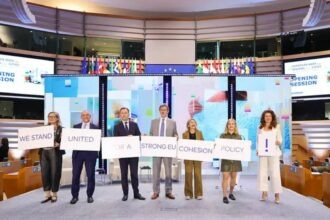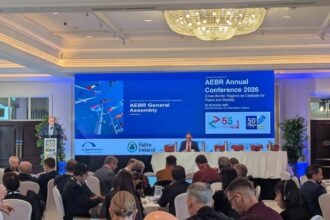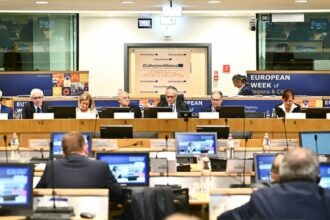
The 24th European Week of Regions and Cities brought together nearly 5,000 participants in Brussels from 12 to 14 October 2026 under the theme Strong regions, strong Europe. Organised by the European Commission and the European Committee of the Regions, the event placed cohesion policy, territorial competitiveness and the role of regional and local authorities in the future EU budget for 2028–2034 at the centre of discussions.
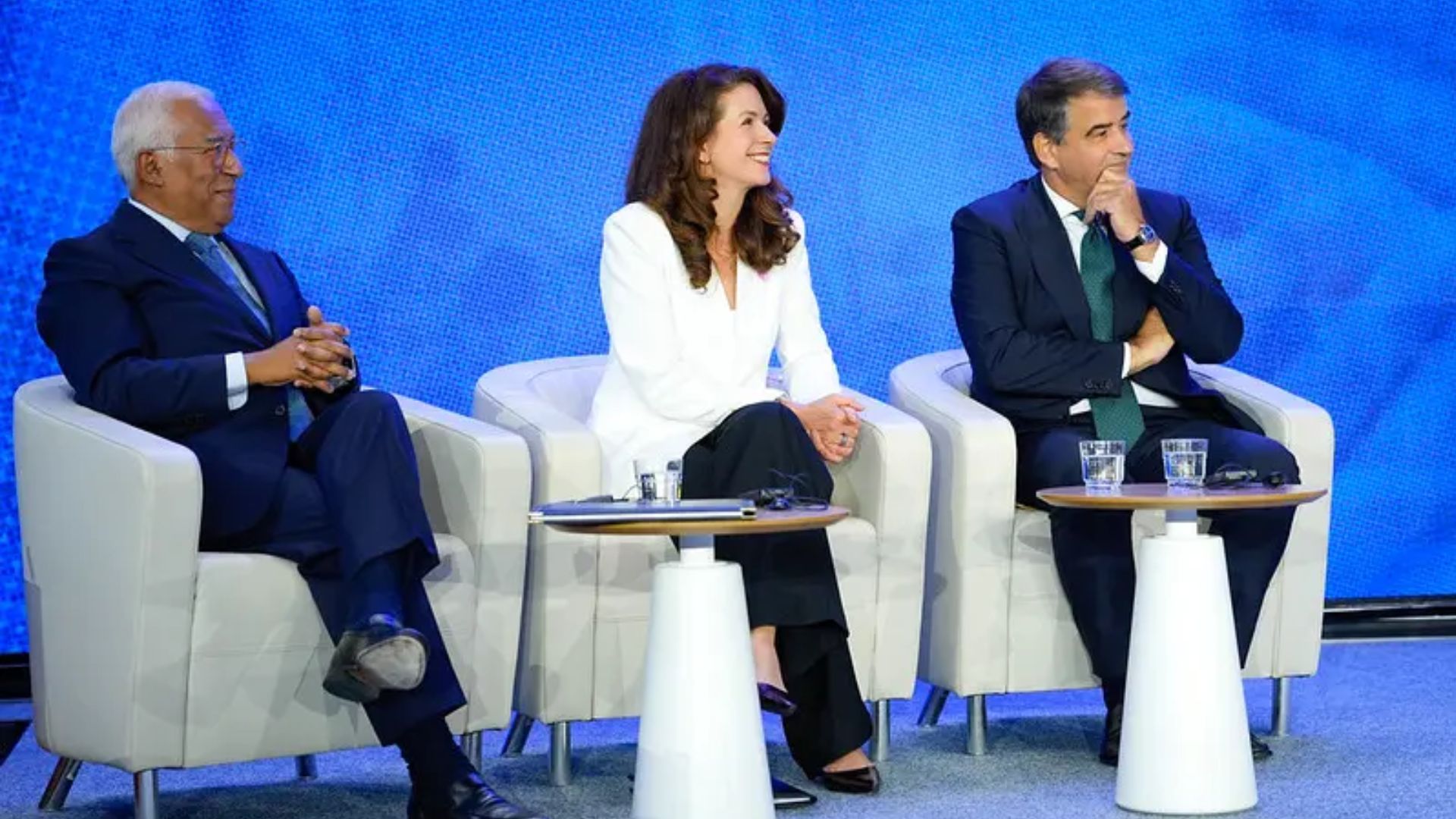
The opening session on 12 October at the European Parliament brought together António Costa, President of the European Council, Raffaele Fitto, Executive Vice-President of the European Commission for Cohesion and Reforms, and Kata Tüttő, President of the European Committee of the Regions. European Parliament President Roberta Metsola addressed participants in a video message. Jack Chambers, an Irish minister representing the Presidency of the Council of the European Union, also spoke.
The debate raised a central institutional question: what role will regions retain in programming and managing European investment when the Commission proposes a new budget structure based in part on National and Regional Partnership Plans?
Kata Tüttő warns against centralisation
In her State of Regions and Cities address, Kata Tüttő defended the role of territorial authorities in European competitiveness and cohesion. She highlighted the risks of concentrating financial decisions at national level, which could limit regions’ ability to set their own investment priorities.
For the President of the European Committee of the Regions, cohesion policy is not a compensation mechanism separate from the single market. It supports the market’s functioning by helping territories develop their infrastructure, economic capacity and connections with the rest of the Union.
At her press conference with Raffaele Fitto, Tüttő stressed the effects of growing economic competition between territories. Stronger regions have more resources to seize the opportunities of the single market. Without cohesion mechanisms, disparities could widen.
She also raised concerns expressed by regions with constitutional powers, particularly in Germany, Austria, Spain and Italy. These authorities fear losing some of their decision-making autonomy under the future partnership plans.
António Costa defends multilevel governance
European Council President António Costa devoted part of his 12 October address to the next Multiannual Financial Framework for 2028–2034.
He identified three priorities for European action: the cost of living and access to housing, economic competitiveness and the Union’s future budget. He also recalled the role of territorial authorities in the energy transition, transport, infrastructure and efforts to address the housing crisis.
On the EU budget, Costa advocated maintaining cohesion and agricultural policies alongside new priorities for competitiveness, defence and security. He called for close involvement of regional and local authorities in the preparation, implementation and evaluation of the new plans.
The European Council President explicitly recalled the principle of multilevel governance. He also advocated an agreement on the next budget before the end of 2026 so that it could enter into force at the beginning of 2028.
His intervention thus recognises the institutional role of regions. However, it does not specify the legislative guarantees that would ensure their effective participation in financial decisions.
Raffaele Fitto links cohesion and competitiveness
Raffaele Fitto outlined the European Commission’s approach around two priorities: the right to stay in one’s territory and competitiveness.
In his 12 October address, he highlighted difficulties facing many communities: the disappearance of public and private services, growing distances to healthcare, a lack of jobs, housing costs and inadequate transport connections.
The Commission aims to strengthen opportunities to live and work across territories without forcing people to leave to access services and economic opportunities.
Fitto also argued that Europe’s competitiveness depends on the development of all its regions. He recalled that the mid-term review of cohesion policy had redirected €15 billion towards competitiveness objectives.
The Commission presents simpler procedures and more flexible funding as ways to improve effectiveness. The European Committee of the Regions, meanwhile, calls for these changes to preserve territorial powers and partnership mechanisms.
In the 2026 report documents, persistent territorial disparities
On 12 October, the European Committee of the Regions published the seventh edition of its annual report on the state of regions and cities in the European Union.
The report examines competitiveness, resilience, territorial finances, local and regional democracy, and demographic trends. It also presents a new edition of the Regional Thermometer, bringing together indicators that track changes across European territories.
According to the figures highlighted by the Committee, one region in two has experienced an increase in poverty and social exclusion, while more than half have recorded a deterioration in labour market conditions.
The report also highlights territories’ growing exposure to climate risks. The Committee estimates that wildfires have increased by 57% over four years and that droughts cost approximately €9 billion annually.
Demographic trends further accentuate differences between territories. Nearly three-quarters of European regions, particularly rural ones, could lose population by 2050, while many urban areas face growing pressure on housing and infrastructure.
These findings reinforce the territorial dimension of European budget choices. Regions do not have equal financial resources or administrative capacity to respond to economic, social and environmental transitions.
The three-day event also addressed economic transformation, citizen participation and territorial development. On 13 October, a session devoted to the Right to Stay brought together, among others, Raffaele Fitto, Antonella Sberna, Vice-President of the European Parliament, Vasco Alves Cordeiro, Chair of the COTER commission, and Dubravka Šuica, European Commissioner for the Mediterranean.
The 13 October session continued the debate on the conditions needed to maintain services, economic activity and development opportunities across European territories.