Jaap Hoeksma, philosopher of law and author of “The Democratisation of the Europoean Union”, proposes an article in honour of Jürgen Habermas, remembering his passing, last March.
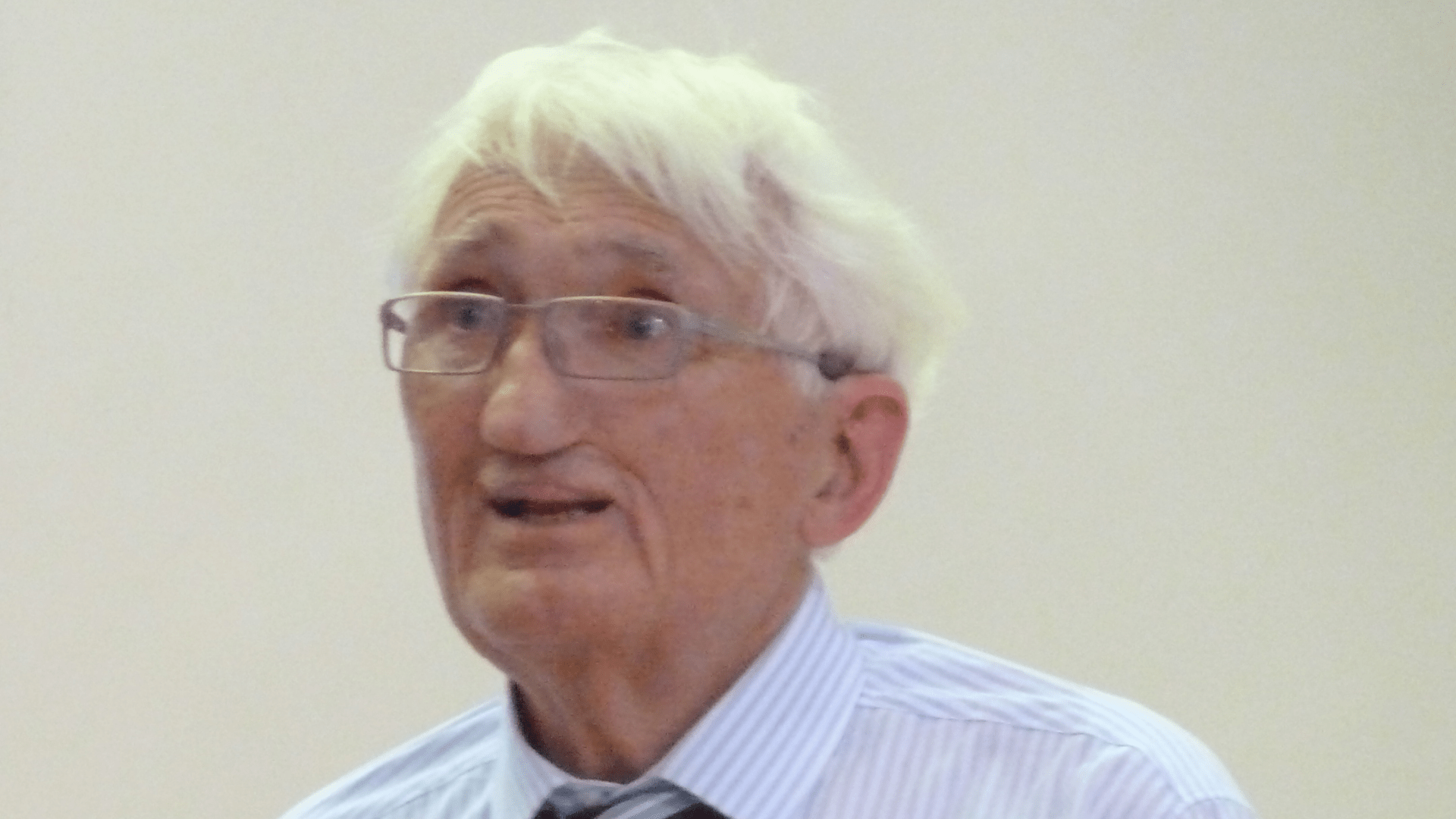
The great philosopher Jürgen Habermas should posthumously be awarded the Honorary Citizenship of the EU for his extraordinary contribution to European democracy. The granting of this special status is a self-given prerogative of the European Council. So far, it has been granted to political protagonists like Jean Monnet, Helmut Kohl and Jacques Delors. Bestowing this status on a critical philosopher like Jürgen Habermas can be perceived as a recognition of the contributions to European integration made by academics of various disciplines. While the present author would like to give his personal motivation as a constitutional lawyer, other readers may wish to pay tribute to Habermas too.
The European Enigma
If the most important quality of philosophers consists of the capacity and the courage to raise the right question at the right moment, then Habermas should be credited for formulating the enigma of Europe in the most perplexing manner. At the height of the euro-crisis he asked:
How to imagine a for closer cooperation necessary, supranational association which complies with stringent demands of democratic legitimacy without assuming the form of a State?1
At first glance, the riddle appears to be unsolvable. Yet, it is most appropriate. Politicians like the British Labour leader and former Vice-President of the European Commission Neil Kinnock described the challenge in political terms as ‘squaring the circle’. In decoded language, it cannot be done!
The political finality paradox
For insiders, Habermas showed the courage to reopen the debate about the political finality of European integration, which had been deadlocked since the infamous 1957 Stresa Conference on the identity of the first European Community. The question under discussion by almost 500 participants was whether the ECSC formed a new kind of organisation or had to be classified as just another international organisation. As the academics and intellectuals, gathered in the lavish resort near the Lago Maggiore, failed to find common ground after a 10 days(!) debate, they agreed to disagree. Since then, the emerging European polity has been referred to as an organisation of its own kind or – as current students continue to be taught – an organisation sui generis. While the understanding between the federalists and the intergovernmentalists enabled the polity to proceed and to transform itself into the European Union, the two ideologies also realised that progress could only be made if and as long as the political finality was not mentioned. Against their own better judgment, they created and nurtured the paradox of the finalité politique.
Nietzsche’s word of advice
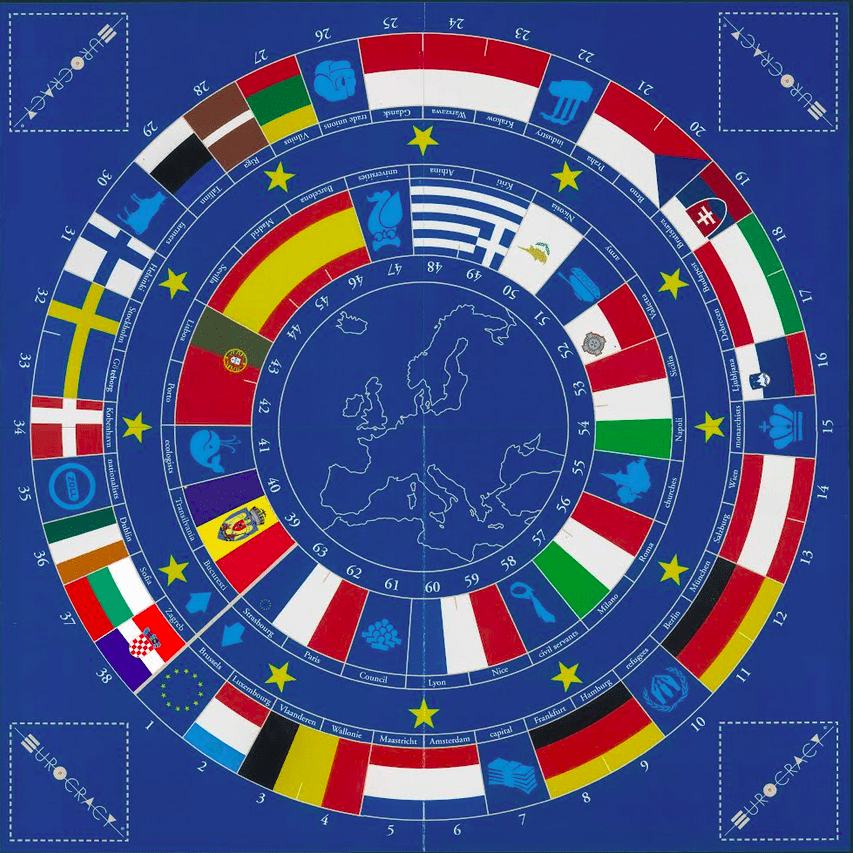
Habermas dared to break the spell of the political finality paradox. Having been a staunch and brilliant advocate of a federal European state as a forerunner of a cosmopolitan community, he acknowledged the possibility that the 2007 Lisbon Treaty did not construct the EU as a federal state and formulated his pivotal question. For me, it meant the start of a new journey to a destination unknown. I had volunteered to explain the Lisbon Treaty at schools and universities using a board game about European democracy. During Habermas’ visit to my hometown of Amsterdam, where he was awarded the Erasmus Prize in 2013, I gave him a copy of Eurocracy and received notice that he had enjoyed watching his grandchildren playing the game during Christmas. His reaction felt as an endorsement of my effort to use the game for discussing the European enigma in the classroom. In the evening hours I returned to the ominous Stresa Conference and to the prevailing theories of European integration. Retrospectively, I learned to appreciate the wisdom of Nietzsche’s advice, provided in his Ecce Homo, that, if you are stuck with a problem that you cannot solve, however hard you try, you have to turn it into a game. Although Habermas did not encourage the use of humour in the public debate, he could not stop laughing when I privately informed him about the inspiration I had drawn from Nietzsche.
The theory of democratic integration
In the classroom, we went back to basics. The parties to the first treaty in the process of European integration were democratic states, determined to prevent the renewed outbreak of war between them. The revolutionary method they employed was to share the exercise of sovereignty in a limited field for a limited period of time. Encouraged by the initial success, they agreed to broaden their unprecedented experiment to the whole of the economy. As democratic states they envisaged to create an ever closer union between the peoples of Europe. The conclusion to be drawn at this juncture was that the member states of the European Communities no longer regarded each other as potential enemies but rather as congenial partners in a common effort. In effect, they replaced perennial enmity with mutual trust. From this perspective, it seemed self-evident to suggest that, if democratic states agree to share the exercise of sovereignty in an increasing number of fields in order to attain common goals, their organisation should be democratic too. After the observation of this paradigm shift, which had gone unnoticed so far, it fell upon me to draft a democratic theory of European integration and to write a book about the democratisation of the EU. In the end, I could summarise my findings in the clear and simple sentence that the desire for ever closer union among the peoples of Europe is resulting in the emergence of the EU as a democratic union of democratic states.
A democratic union of democratic states
The voice of Habermas has been heard all over Europe and beyond. In the legal domain, the EU Court of Justice has heeded his call concerning the shape of the polity. Its groundbreaking Conditionality Verdicts of 16 February 2022 may even be read as a clear and direct answer to the pivotal question raised by Habermas a decade earlier. Step by step the Court shows how the EU has succeeded in reconciling the concept of a supranational association with the requirement to meet stringent demands of democratic legitimacy. It observes that the member states have first agreed on their common values and subsequently applied those values to their Union. Incrementally and bottom-up, the EU has evolved from a union of democratic states to a union of democratic states which also constitutes a democracy of its own. In short, a democratic union of democratic states, in which the citizens are entitled to participate in the political life of both their country and their Union and in which the fundamental rights are guaranteed on the national as well as on the transnational level.
Honouring Habermas
In the weeks after Habermas’ death, I have come to cherish the thought that his question has given the impetus for the solution of the allegedly insolvable enigma concerning the shape of the Union. In this construction, his idea of constitutional patriotism can not only flourish but also help the EU in defending its identity as a European democracy against internal and foreign threats. For these reasons and more, Habermas’ extraordinary merits for European integration should be recognised by the EU.
Other readers of the voluminous and influential body of work which Habermas has bequeathed on present and future generations are welcome to add their voice to this impromptu homage. A collection of testimonies may induce the Council to award Honorary Citizenship of the EU to its most inspiring and critical philosopher. As an educationalist, I would suggest that the 40th anniversary of the EU ‘s flagship Erasmus Programme offers an exquisite occasion for this extraordinary tribute to an outstanding European. Europeans committed to COEUR may share expressions of sympathy and/or support with the author at Euroknow@gmail.com.
1 Der nächste Schritt für Europa, Die Furche, 23/24 May 2012
Published with the courtesy of EUobserver.