Why Regions?
Many people feel insecure because of the many challenges and different crises that are emerging at the same time, changes such as digitalization, AI and robotics that are accelerating, a global world that is ours and in which people no longer recognize themselves, and are seriously concerned by wars and conflicts that destroy human lives. The extreme right and the populism associated with it are increasingly being supported in various countries.
The question arises as to how people regain the feeling and support to believe in a society that is based on solidarity and does not pit them against each other?
In doing so, it is important to use those pillars of democracy that strengthen this connection. In addition to other levels of government, regions play an important role in this. Why?
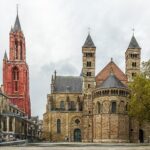
Regions are often the biotope in which proximity to the people is strongly felt because they carry within them the memory of a common past and culture, a terroir in which recognisable traditions are kept alive and cultural heritage is an important part of the heritage.
Moreover, the tourist assets and the appeal of nature mainly refer to a region.
They are a policy level on a human scale, not too small to make things happen, not too far away and too big to be sufficiently involved and therefore often with the right dimension to offer the solutions in which people recognize themselves. In this way, they form the right bridge between the local and the national or European level.
It is also the space in which the economic initiative is anchored and in which a tangible dialogue between the economic and social partners takes place. Where agreements are made concrete and binding.
In which the organisation of education takes place to bring together different disciplines and where universities and scientific institutions naturally thrive and form clusters of competences and cultural creativity develops, diversifies and thus strengthens.
In order to provide people with good health care and to develop so social services, regions are the right measure for quality agreements.
Very often, experiments are set up there on innovation in all kinds of areas, not least in the field of environmental management, including measures to achieve the necessary transition due to climate change. Where craft or development zones see the light of day. And be the reference for agricultural and horticultural products.
It is also striking that the largest share of the investment budgets for infrastructure and mobility is spent by the regions and in this way, literally, ensure connection between people. And where transregional cooperation is a daily reality.
Last but not least, the regions are the direct link between Europe and its people. A very large percentage of European legislation is developed and implemented here, and the European Structural and Investment Funds are directly aimed at regional development.
The ‘Europe of and with the regions’ is not another Europe, but a specific and important dimension of the European project. It is a contribution to democracy in the Member States and to European democracy.
When faced with the realities of everyday life, regions are not artificial constructs or institutional fictions.
On the contrary, they are tangible wholes for people’s interconnectedness and landmarks for others.
Regions form the appropriate balance between personal security and the world outside.
They are thus valuable nuclei of what we understand by the achievement of a ‘reasonable democracy’ that is human – centered. A space where trust can thrive.
READ ALSO: The multiannual financial framework (MFF) and the role acquired by regional or federal entities