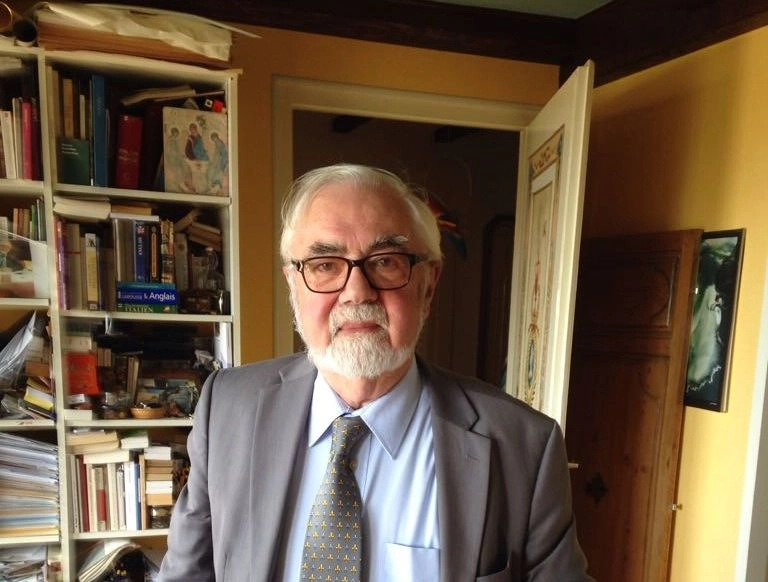
Presentation and working paper by Professor Charles Ricq (early 2000s)
1. CŒUR or European Centre for Regional Observation
Initiated by Denis de Rougemont in October 1976 through the University Institute of European Studies, created in Geneva in 1963 (IUEE), and the European Cultural Centre (CEC), created in Geneva in 1953 following the Hague Congress (1948)
Became autonomous in 1992 when the IUEE merged with the University of Geneva
Now operates through an Executive Committee, a Committee and a General Assembly
Current President: Catalan Minister Joann Vallve (SP)
Two Vice-Presidents: Ambassador Yves Moret (CH)
Mr Wilfried Baur, European Parliament (FRG)
Secretary-General: Ambassador Hans de Bolder (B)
Scientific collaborator: Ms Moglia (I)
Administrative secretary: Ms Leresche (CH)
With around 100 members from across Europe.
Objectives (taken from Denis de Rougemont’s latest book, L’Avenir est notre affaire, published by Seuil, 1975) To observe, analyse, evaluate and interpret the place and role of regions, particularly border regions, in European integration
Main publications in addition to Denis de Rougemont’s work, the ‘White Paper on Border Regions’ (1991)
the Manual of Cross-Border Cooperation, 1st edition in 1995 – completely revised in 2006.
Secretariat: Villa Région d’Europe / Chemin de la Renardière 4
CH – 1272 G E N O L I E R (VD)
2. Cross-border training
2.1. Experiences
Le Cœur, together with the IUEE at the University of Geneva, in conjunction with the universities and university institutes of Grenoble, Turin, Lausanne, Sion and Aosta, organised courses with field analyses for more than 10 years, from 1991 to 2001, as part of its ‘continuing education’ programme, leading to a ‘University Certificate’. These courses and field analyses took place annually in the form of 10 modules (1 per month) and on a travelling basis throughout the cross-border area of the northern Western Alps. The participants were also final-year students, doctoral students, elected representatives, local civil servants, business leaders, association presidents, unemployed people, etc.
N.B. A ‘cross-border master’s degree’ signed by several cross-border universities was impossible to achieve!
2.2. Content
Objective: to get to know one’s neighbours better, to appreciate them more, to plan for consultation, cooperation, harmonisation and even integration (living areas, employment areas, etc.).
Theoretical, experimental and multidisciplinary training (of the ‘continuing education’ rather than ‘initial training’ type) through 10 modules, each lasting two days; one seminar;
the second involving fieldwork in legal and institutional analysis
political and sociological analysis
economic and social analysis
cultural analysis
historical and geographical analysis
spatial analysis of land use planning, etc.
modules taught by professors, experts, field specialists, elected officials
European, national and regional civil servants, etc.