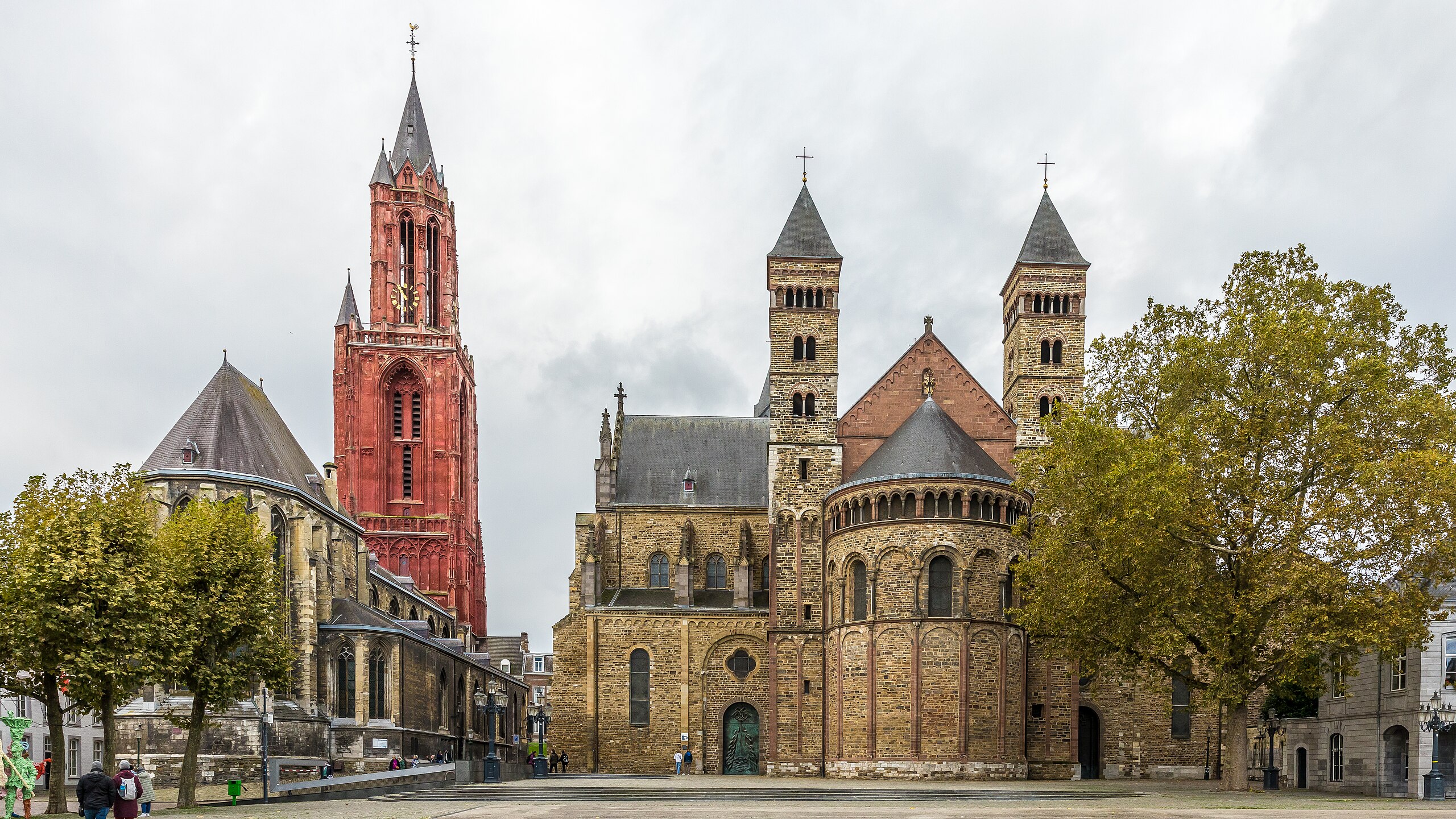
Maastricht, 6 and 7 July 2009
in order to make thorough preparations for the Conference of Ministers of the Interior of the 47 member states of the Council of Europe, to be held in Utrecht on 15–17 November 2009
The CDLR has taken the welcome initiative of organising a conference on cross-border cooperation with the support of all the Dutch authorities. It is therefore with pleasure and honour that I am participating in this conference in Maastricht, given all my analyses and cross-border experiences throughout Europe over more than 25 years. My presentation will be divided into two parts. The first will focus on the seven essential points for any analysis of the cross-border phenomenon in Europe. the second will consist of answering the five major questions that arise for any cross-border actor, whether public or private, thus leading to the basic objective, namely a dense and sustainable fabric of all human relations in border regions, all of which are catalysts and harbingers of European integration, in unity and diversity. What could be more specific than each cross-border region! …
The ultimate goal of border areas and cross-border regions is therefore to achieve greater cross-border democracy, greater cross-border partnership and solidarity, greater cross-border governance and, I would even add, greater cross-border identity and culture, and thus ultimately a greater Europe. It is therefore a question of highlighting the added value that cooperation and integration in all border areas brings to Europe in all areas of proximity.
Part 1: the seven cornerstones of any cross-border phenomenon in Europe.
Cross-border cooperation is one of the irreversible elements of the European integration process, with a set of parameters in terms of public international law, the reunification of Europe, subsidiarity and partnership, regionalisation and decentralisation, etc. Let us note that cross-border, transnational and interregional cooperation has gradually become part of European integration, often more in practice than in law, and that this is irreversible. While the Council of Europe has successfully attempted to better define the normative framework for cross-border cooperation, with a great deal of flexibility and by emphasising the importance of each State’s domestic law for the political and administrative organisation of its territory, for its part, the European Union, whose ultimate goal is political integration, has invested heavily, with real success, in its INTERREG initiative programme on cross-border cooperation, and now, since 5 July 2006, in its new Community regulation on the European Grouping of Territorial Cooperation (EGTC).
However, it must be recognised that although INTERREG has contributed significantly to the development of cross-border relations in many areas throughout Europe, and increasingly with a view to greater territorial cohesion across the European space, in fact, in the legal reality established by the Treaties of Rome, Amsterdam, Maastricht and Nice, the absence of a Community legal instrument for cross-border cooperation, which would first and foremost remedy the lack of operationality of the Council of Europe’s Madrid Framework Convention, has weakened the Community’s intentions to develop European integration in all its border areas, which are increasingly perceived and conceived as “seams” rather than “cuts”. And given the recent emergence of a proliferation of Euroregions in the CEECs and South-Eastern Europe, valid legal bases are needed for all cross-border experiences within the Community territory and the European area in general.
As the territorial organisation of each state is a matter for its domestic law – as Brussels and Strasbourg regularly point out – it goes without saying that cross-border cooperation, which affects in its very foundations, the territorial organisation of each State and therefore the concept of ‘national territory’ with all that this entails, can only be limited by this dual observation of both the slowness of the political construction of the European Union and the mandatory reference to the domestic law of each State with regard to its territorial organisation, especially at the borders of its national territory. In other words, can cross-border cooperation only be the result, at the legal level, of the confrontation or harmonisation of two or three domestic laws of the States concerned, or can it, in the medium or long term, be based on the new Community legal instrument that would be part of the territorial cohesion policy (Articles 151 and 158 of the Treaty)? Does this then imply a new transfer of powers, a new “extension” of Community powers resulting from a possible new Constitutional Treaty of the European Union? The future will tell if the Treaty of Lisbon is accepted by the 27 Member States of the European Union in the course of 2008.
Should we therefore give up and wait for the political integration of Europe to be fully established in order to better anchor cross-border cooperation politically and legally? No. Several practices or scenarios are possible, without rushing things and always convinced that, very often, facts precede the law. This is one of the objectives of this first part, which takes into account the enlargement of the European Union, an enlargement that reconciles European history and geography, following the example of what the Council of Europe already represents geographically.
The seven essential points of the border phenomenon in Europe today and in the future
By analysing all the official and published documents of the Council of Europe from 1977 to 2007, the positions taken by the Parliamentary Assembly, the Congress of Local and Regional Authorities and, for the European Union, the European Council, the European Commission, the European Parliament and the Committee of the Regions,
we can establish seven key points that form the basis of any cross-border cooperation experience in Europe. These points are essential for establishing definitions, institutions, stages and areas, obstacles and dynamics, and perspectives, which constitute the essence of my cross-border analyses and experiences.
First starting point: four major political systems – all democratic, it should be noted – characterise the states of Europe, namely centralised systems where the organisation of the territory is decentralised into purely administrative regions; decentralised systems that grant regulatory powers to regional authorities, often giving them legal personality; regionalised systems that allow regional authorities to legislate in all areas granted by the Constitution; and finally, federal systems that provide, among other things, exclusive powers for the parliaments and governments of each of their federated states.
Second starting point: Territorial sovereignty remains a strong point for the 47 member states (as of 5 October 2006) of the Council of Europe and the 27 member states (as of 1 May 2007) of the European Union, which means that any form of cross-border cooperation remains a ‘matter of state’, especially for the first three political systems mentioned above, although federal states themselves generally remain very ‘cautious’ about the cross-border relations of their federal states. To overcome this ‘national sovereignty’ – with borders in Europe having become definitively intangible – some political scientists have put forward the hypothesis, for cross-border regions, of ‘depoliticising the notion of border territory’ or, more realistically, of ‘better sharing sovereignty’ between states in their border areas; which, in practice, would only lead to a ‘de-functionalisation’ of borders and not to their disappearance. It was out of a desire to respect these national sovereignties and thus the international nature of cross-border relations that the Council of Europe developed, in Madrid on 15 May 1980, the ‘Framework Convention’ on transfrontier cooperation, to which a first protocol was added in 1995 and a second protocol in 1997, pending a third protocol in November 2009 on ‘Euro-regional transfrontier cooperation’; These conventions and protocols emphasise the essential reference to the domestic law of each State for all forms and content of its territorial organisation and, therefore, its cross-border relations at the limits of its territory.
Third starting point: cross-border Europe already has a long history. Based on my analysis of all the border areas of the 47 member states of the Council of Europe, what stands out is the richness, complexity and enormous variety of cross-border experiences that punctuate the history and geography of Europe, even in certain very peripheral areas that are specific to some border regions.
The cross-border dynamic that explains this richness and complexity of cross-border relations throughout Europe is based, of course, on the political will of local and regional authorities in border areas to jointly resolve similar problems, but also on decentralisation, which is becoming increasingly pronounced and stimulating in most European States. All these decentralisation laws have increased the growing responsibility of local authorities for cross-border cooperation everywhere, even though, as a general rule, states rightly want to retain a degree of control over cross-border relations concerning their local authorities, regardless of their political system of reference. Should cross-border cooperation be ‘formalised’ to such an extent that it becomes homogenised into a ‘single model’? This is not an ideal to strive for. Should we even wish for the emergence of a ‘standard model’ of cross-border cooperation in Europe, a model dear to pure theorists? The reality of cross-border cooperation demonstrates the opposite, while affirming the need in Europe for exchanges of successful cross-border experiences, which are not necessarily exportable from one case to another. A few basic principles and guidelines are clearly essential to ensure the authenticity and European significance of all cross-border relations. It will then be possible to identify ‘profiles’ of cross-border cooperation that would be interesting to follow, “profiles” that would allow for fairly convergent and stimulating ‘cross-border reading grids’.
Fourth starting point: the specificity of each cross-border region no longer needs to be emphasised, whether taken individually or collectively. This individual or collective specificity – a true typology of cross-border regions has yet to be established – is rooted in their history and geographical location, but also in the ‘transversal’ or ‘multidimensional’ nature of all cross-border relations. These relations extend to all areas covered by either Community law, the domestic law or type of territorial organisation of each State, or the powers devolved to their local authorities by each State. This ‘transversality’ or ‘multidimensionality’ of cross-border relations makes the complex reality of cross-border cooperation even more specific, whether in the fields of employment, the (de)localisation of businesses, the environment, spatial planning, transport, telecommunications, health or training infrastructure, the media, etc. and even more so in the areas of taxation and social protection. What legal instrument would be ideal for the Council of Europe or the European Union to address this parameter of the ‘transversality’ or ‘multidimensionality’ of cross-border cooperation? Uniformity or a single model are hardly conceivable, nor even desirable, because the unity of Europe is and always will be built on its diversity.
Fifth starting point: the variety and complexity of the border issues faced by all border regions in Europe, whether central or peripheral, combined with the political will of all States to sufficiently control the cross-border relations of their local authorities, have led, in European history over the last four to five decades, to a proliferation of bilateral or multilateral agreements between States. These agreements, whether they preceded or followed the Council of Europe’s Framework Convention on Transfrontier Cooperation, approved in Madrid on 15 May 1980, have all facilitated and promoted cross-border relations in their border areas. There has been a real progression in the content of these bilateral or multilateral agreements; one of the most recent, signed in Karlsruhe in 1996 between Germany, France, Luxembourg and Switzerland, grants legal personality and financial autonomy to the border organisations covered by the Agreement, under the leadership of the States. This was a new step forward that was to be extended to all European borders and would have facilitated cross-border projects, a new step that has now led to a new Community regulation since 5 July 2006 and a possible ‘new Council of Europe protocol’ in 2008 or 2009 on cross-border cooperation; because, de facto, there are increasingly few borders within the Community or European area in general that are not yet covered by bilateral or multilateral agreements, to which many States still attach great importance.
Sixth starting point: Community law, which constitutes a specific area of public international law, has seen its powers expand as the Treaties have marked the history of the European Union, namely the Treaties of Rome, Maastricht, Amsterdam and Nice, pending ratification by the 27 States of the future Treaty of Lisbon. The latter provides not only for the principle of unanimity in decisions by the 27 Member States to be replaced in certain areas by the principle of qualified majority voting, but also for the creation of new Community powers: for example in the area of regional policy, insofar as all Member States are convinced of the essential need for European integration to promote ever greater social, economic and territorial cohesion throughout the Community. Would cross-border areas be the first to be included in these new areas of new “shared sovereignty”? However, even if Community law takes precedence over the domestic law of the 27 Member States, at least in the areas of competence transferred by the States to the European Union under the principle of “bottom-up subsidiarity”, this is not yet the case in areas of exclusive competence that are still reserved for the States and therefore subject to the principle of unanimity for any new transfer. The important question for the future is whether new delegated or shared powers can be envisaged within the European Union, particularly in the context of regional policy.
Seventh starting point: Community regional policy, which has grown in importance since its formal launch in 1975 with the creation of the ERDF, has specific characteristics that limit its scope. Its initial character of additionality in relation to the regional policies of each Member State has undoubtedly hampered and continues to hamper its potential; However, based on the objective of ‘harmonious development of the entire European area’ and the deepening of territorial cohesion,(1) border regions, which in their own way indicate and catalyse all the effects of European integration, perhaps more than others, undoubtedly highlight the need to expand, among other things at the level of Community law, the scope and competences of the European Union’s regional policy. The importance of Community funds for the territorial cohesion of the European Union enlarged to 27 members for the years 2007-2013 – €308.1 billion – further reinforces this obligation. The European Council of 19-20 December 2005 in Brussels had already set the amounts, also providing for the allocation of significant Community funds to the external border regions of the European Union in the name of a “new neighbourhood policy” towards third countries. The European Parliament approved these amounts and the Community budget on 4 July 2006, thus reaching a compromise with the European Council between the €307.619 billion decided at the European Council of 17 December 2005, €309.5 billion suggested by the Luxembourg Presidency in June 2005 and €336.3 billion initially retained by the European Commission and the European Parliament in July and September 2004 respectively.
These seven starting points already provide answers to most of the five major questions that concern all reflection, action, experience and projects relating to cross-border cooperation, namely answers to the five major questions, which attempt to:
- better define the concepts of cross-border cooperation – and therefore of borders;
- better identify the legal instruments necessary for all forms of cross-border cooperation;
- specify the areas and steps essential to addressing them;
- identify everything that stimulates and hinders cross-border cooperation;
- finally, look ahead to what the combined will of all European, national, regional and local authorities in the field of cross-border cooperation can achieve.
Professor Charles RICQ
Geneva, 24 June 2009